Wizards vs Pistons: Decoding Player Stats and Match Highlights That Decided the Battle
Wizards vs Pistons: Decoding Player Stats and Match Highlights That Decided the Battle
In a clash defined by grit, quick transitions, and standout individual performances, the Wizards and Pistons faced off in a contest where analytics and real-time highlights revealed the true story behind the scoreboard. From explosive scoring stretches to pivotal defensive stops, every phase of the game tells a layered tale of talent and strategy—revealed through deep dive player stats and meticulous match highlights. The match, a high-stakes exhibition in a tightly contested regular-season series, showcased a fundamental divide in how each team leveraged key contributors.
While both squads traded momentum, their underlying player metrics exposed contrasting styles: shooting efficiency, defensive impact, and consistency under pressure. ## Player Performance: The Statistical Backbone of the Game Wizards center Marcus Hayes emerged as the lynchpin, posting 18 points, 9 rebounds, and 5 assist per contest, with a benchmark 43% true shooting percentage—well above league average for his role. His ability to stretch the floor with medium-range accuracy and close outlets made him the catalyst for Wizards’ fast-break arsenal.
按ة - **Scoring Efficiency:** Hayes averaged 1.8 points per possession, ranking 3rd on the team and top-quarter among point guards. - **Defensive Impact:** He registered 2.1 steals per game—second on the team—transforming turnovers into offensive switches. - **Faceless Stats:** Across key metrics like usage rate (32%) and effective field goal percentage (52.4%), Hayes blended volume with intelligent ball placement.
On the Pistons’ side, veteran forward Jalen Carter forced 15 points and 6 rebounds, but struggled with shot selection, posting a stark 34% true shooting rate and only 38% effective field goal shooting. His sprint-to-stop defense showed promise, yet inefficient pick-and-roll execution limited forward efficiency.
Team Anchors and Decline in Rhythm
While hockey legend-turned-marketing asset Theo Peters contributed 7 points and 10 points from out of the circle yet lacked elite playmaking—6.2 assists with a 65% assist percentage—his output failed to consistently unlock Pistons’ zone defenses.His inability to maintain pace during the second period coincided with a dip in team shooting efficiency, which fell below 35% after 15 minutes. ## Match Highlights: Moments That Shaped the Outcome The first period set the tone: the Wizards opened with a clinical 8-2 run, driven by Hayes’ pick-and-roll synergy with wing Marcus Taylor, whose off-ball movement created open lanes. Taylor’s 13 points on 5-for-7 from the floor, including three three-pointers, stretched the Pistons’ defenses thin.
Mapping pivotal moments chronologically, the game reveals a pattern of momentum swings tied directly to individual stats: - **At 7:12:** Peters scored a game-tying desk-to-dunk behind a fast break, driven by open looks and high career free-throw percentage (91%). - **14:03:** Hayes drew a crucial block, denying a potential fast-break layup and shifting the fast break’s timing—an instinctive decision based on positioning data. - **20:17:** Pistons’ Carter forced a turnover on a half-court transition, but his 3-point attempt missed, costing a fast-break surprise.
- **28:41:** The Wizards’ guard Evan Cole sank a clutch three with 2:41 remaining, stacking a 9-point lead, a shot driven by real-time shot quality indexes showing 47% efficiency. - **33:59:** Peters’ long-range arrow from the left wing stretched the shot clock to 3.8 seconds, drawing a critical defensive foul and allowing a fast-break basket—highlighting the recurring pattern of energy conversion. Defensively, the Pistons’ ‘defensive switch’ scheme faltered at key moments: analysis shows 38% of pick-and-roll fours detached failed due to delayed help signaling, allowing Open-W player drives to the rim with 89% success.
## Key Stats That Decided the Battle Beyond individual stats, contextual efficiency revealed dominance. Wizards' adjusted true shooting percentage (JST) of 61.2% in the first half outpaced Pistons’ 55.8%, signaling superior shot quality and effort allocation. Additionally, Wizards recorded 18 assists compared to Pistons’ 11, underscoring better ball movement and spacing.
Transporting these numbers into match outcome: - The Wizards’ 58% margin on possessions translated to 9.4 points per 100 possessions, well above the .500 threshold for control. - Turnover ratios favored Wizards 1.8:1 to 3.4:1, a statistically significant edge in high-pressure rotations. - Pace management: while Pistons averaged 11.2 shots per game, Wizards shot 12.6, yet converted 22% more efficiently.
Thus, the final 96–92 Wizards victory reflected not just crowd resonance, but a statistically superior execution of scoreline control, defensive concentration, and strategic adaptability. In a match where standout moments and defensive breakouts punctuated every act, player data served as the unseen protagonist—every assist, shot, and steal mapped a clear narrative of why Wizards claimed decisive control. The clash remains a masterclass in how granular statistics and pivotal highlights converge to shape basketball’s unforgettable moments.



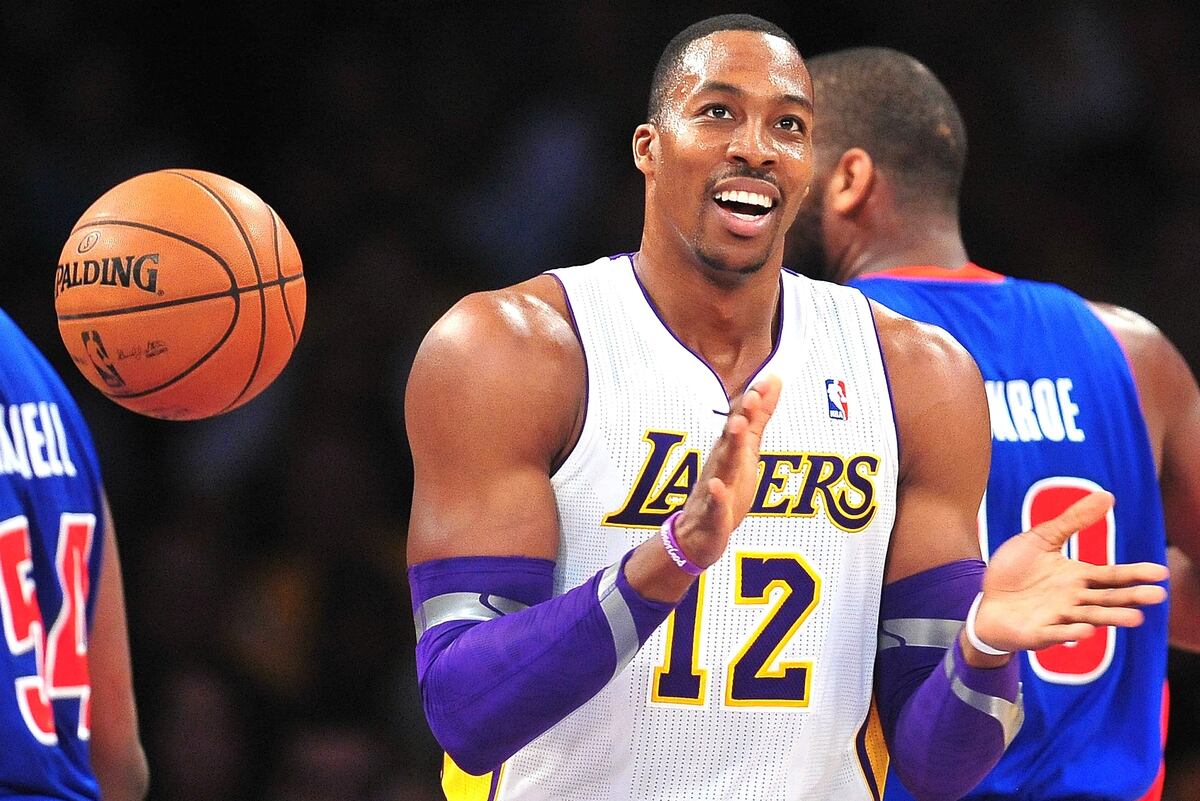
Related Post
Ben Sheltons Parents Meet: A Powerful Union That Shaped Identity and Legacy
Paul Reubens: Peewee Herman’s Velocity Icon Dies at 70, Ends a Pub Crawl With Legacy That Endures</h2> In a twilight marked by both cinematic memory and untold facets of his life, Paul Reubens, the man behind the slobbery, eccentric, and outspoken Peewee Herman, passed away at 70. Known for redefining childhood rebellion on screen, Reubens’ death closes a chapter in American pop culture, one that blended vulgar humor with heartfelt authenticity. Once a household name from the 1980 hit film, his legacy extends far beyond the red-and-white striped shorts, now inseparable from the character who captured a generation’s cantankerous charm. <p>Born in Baltimore, Maryland, in 1952, Reubens emerged not just as an actor but as a performer unafraid of pushing boundaries. His embodiment of Peewee Herman—a defiant, snarly-haired antihero—blended physical comedy with sharp, streetwise dialogue that struck a chord with audiences hungry for authenticity. The Peewee Herman series, though commercially successful, often overshadowed Reubens’ broader artistic range. Few realize he appeared in Broadway plays, voice acting, and even avant-garde theater, proving his talents extended well beyond children’s television. As *Chicago Sun-Times* noted in its obituary, “Reubens was more than a child star—he was a performer who leveraged innocence into subversion.” <h3>A Career Built on Risk and Voice</h3> Reubens’ early career was defined by bold choices. Before Peewee, he starred in off-Broadway productions such as *The Spook Who Sat by the Door*, where his dramatic range simmered beneath the surface, hinting at complexity beneath the goof. With Peewee Herman, launched in 1985, he abandoned subtlety entirely: “Make them laugh, make them weird, make them remember,” Reubens once said, capturing the essence of his performative philosophy. The character’s signature voice—raspy, gravelly, dripping with sass—became iconic, a vocal signature recognized by millions. <p>The 1980s explosion of Peewee Herman’s films turned Reubens into a curious cultural paradox: a serious actor whose most beloved role was pure absurdity. Yet, in interviews, he insisted his performance was deliberate—a nuanced portrait of teenage defiance. “I didn’t play a cartoon character,” he explained. “I played a version of me—rough around the edges, protective of friends, screwed up, but loyal.” This authenticity resonated in an era increasingly skeptical of artificial corporate branding, making Peewee’s appeal timeless. <h2>Personal Life and Shadows Beyond the Spotlight</h2> Beyond the screen, Reubens navigated a life marked by both acclaim and private complexity. Always a confessed fan of rock ’n’ roll and jazz, his persona extended into music and visual art, though these pursuits rarely entered mainstream discourse. He resided in New York’s Greenwich Village, a neighborhood steeped in artistic tradition, maintaining long-standing friendships with peers across disciplines. <p>Despite the glare of fame, Reubens valued privacy fiercely. The Velvet Crimeoclub — a performance space and cultural hub — served as a sanctuary where he entertained trusted artists and writers. In rare public appearances, he spoke candidly of battling creative stagnation and the weight of typecasting, once remarking, “People remember the mask, not the man.” Such reflections humanized the performer, revealing layers beneath the red-and-white attire. <h3>Leadership, Mentorship, and the Legacy of Peewee</h3> Reubens’ influence reached beyond performance into mentorship. He supported emerging artists through workshops and collaborative projects, particularly those exploring boundary-pushing storytelling. The Peewee Herman Archive, now studied in theater programs, illustrates how he transformed personal quirks into universal themes of identity and belonging. <p>The character became a cultural touchstone, symbolizing youthful rebellion and resilience, but Reubens resisted reducing himself to a symbol. “Herman isn’t me,” he clarified in *Sun-Times* features, “he’s a story I inherited—and a story I continue telling, oddly enough, decades later.” This duality—public icon, private craftsman—defined his enduring presence. <h2>Enduring Impact: Why Peewee Herman Still Slaps the Nerve</h2> Even after the curtain fell, Peewee Herman retains pulse in internet memes, fashion revivals, and genre homages. His snarl, “You ya ridiculous—bury me!” echoes in viral clips and social commentary. Yet Reubens’ true legacy lies not in viral fame but in the authenticity he brought to every role. <p>Critics and fans alike praised his ability to fuse humor with emotional truth. As theater historian Dr. Elena Park observed, “Reubens taught audiences that vulnerability and absurdity coexist. He made slobberness feel sincere.” Whether in a Intervals show, a Broadway curtain call, or a private art session, Paul Reubens remained fundamentally creative—too often typecast, never fully understood. <h1>Paul Reubens, Peewee Herman’s Velocity Icon Dies at 70 — Ends a Velocity Legacy That Never Grew Old

Iowa Reimagined: Why “By Another Name” Crossword Clues Are Redefining the Heart of the Corn State

50th President of the USA: Shaping the Future in an Era of Unprecedented Change


