Broken News Exposes the Hidden Epidemic Swamping Modern Media Responsibility
Broken News Exposes the Hidden Epidemic Swamping Modern Media Responsibility
In an era where headlines dominate attention and digital noise drowns out nuance, Broken News has uncovered a disquieting surge in journalistic failures that undermine public trust. What began as isolated reports of editorial lapses has escalated into a systemic crisis revealing how broken news covers misinformation, misattribution, and institutional negligence with alarming frequency. From viral falsehoods masquerading as reports to this year’s sharp rise in sensationalized, unverified stories, the evidence paints a clear picture: the gatekeeping function of journalism is crumbling, with consequences reaching far beyond headlines.
Broken News tracks incidents of rushed reporting, recycled content without verification, and the spread of misleading narratives—often fueled by social media amplification and shrinking newsroom resources. The organization has documented over 40 cases in 2024 alone, where outlets published unconfirmed claims in under 12 hours, later retracted but not before widespread circulation. “This isn’t just a failure of speed—it’s a failure of responsibility,” states media analyst Sarah Chen.
“When trust erodes once, restoring it demands more than corrections; it requires rebuilding editorial integrity.”
The scale of the challenge lies not just in individual errors but in patterns of omission. Broken News’ investigative series highlights recurring lapses in source validation, especially during breaking news cycles. During a recent geopolitical crisis, multiple prominent outlets cited unnamed “the morning’s intelligence” without corroboration, amplifying speculation as fact.
Such reporting, while often quickly withdrawn, leaves lasting impressions that distort public understanding. In an age where audiences consume news in seconds, the margin for error vanishes—and so do the journalistic buffers meant to prevent harm.
Real-World Examples: When Headlines Become Falsehoods
One documented incident featured a trending story about a suspected attack on a government facility, published just hours after a unverified social media post went viral. The report cited anonymous “security sources,” claimed casualties, and linked the event to an active conflict—all without trailable evidence.Within hours, the story was embedded by several newsrooms, only to be corrected hours later—but not before shares peaked across platforms. “In breaking situations, the pressure is real, but so is the risk,” said reporter James Hale, who covers media reliability at *NewsWatch Daily*. “Rushed narratives compromise credibility and risk lives, both in terms of public panic and misdirected attention.” Another high-profile case emerged from a popular lifestyle brand’s “investigation” into a minor workplace dispute, framed as a sweeping exposé on corporate culture.
The report misrepresented internal HR data, cherry-picked quotes, and omitted key context—yet was reported as a hard-hitting exposé. Broken News verified the source’s credibility deficit and exposed how algorithmic promotion turned a minor incident into a trending scandal, extracting millions of clicks at the expense of truth.
The fallout extends beyond reputational damage.
Socioeconomic implications include eroded civic engagement, increased polarization, and diminished public confidence in fact-based discourse. Research cited by Broken News shows that audiences exposed to repeated unchecked reporting are 37% less likely to trust legitimate news sources, even when corrections are issued. In a democracy, informed citizens depend on accuracy—and when that foundation cracks, collective decision-making weakens.
Root Causes: Resource Constraints and the 24-Hour News Cycle
At the heart of the issue lies a dual crisis: shrinking newsroom staffing and the relentless demand for instant content.Broken News interviews veteran editors who describe shrinking budgets as “a one-way street to compromise.” With fewer reporters and fact-checkers, the pressure to produce rapid output often overrides thorough verification. “We’re expected to drive clicks while maintaining standards,” notes Maya Lin, former senior editor at a major network. “When survival depends on visibility rather than verification, shortcuts become routine.” Social media’s role cannot be overstated.
The algorithm-fueled race for engagement incentivizes sensationalism over substance, rewarding emotional, fast-t movimiento content regardless of factual rigor. Broken News found that content flagged as “breaking” within minutes of posting—without editorial oversight—was 6 times more likely to contain errors than stories resulting from normal reporting processes. “The digital ecosystem trains us to believe breaking is the same as breaking news.” said Dr.
Owen Price, director of media ethics at Urban Trust Institute. “Verification takes time; speed is a competitive advantage reserved for


Related Post

Netflix India’s Pseithise Broken News Season 3 Premieres: Set to Drop on March 15, 2024 – What Viewers Must Know
Paul Reubens: Peewee Herman’s Velocity Icon Dies at 70, Ends a Pub Crawl With Legacy That Endures</h2> In a twilight marked by both cinematic memory and untold facets of his life, Paul Reubens, the man behind the slobbery, eccentric, and outspoken Peewee Herman, passed away at 70. Known for redefining childhood rebellion on screen, Reubens’ death closes a chapter in American pop culture, one that blended vulgar humor with heartfelt authenticity. Once a household name from the 1980 hit film, his legacy extends far beyond the red-and-white striped shorts, now inseparable from the character who captured a generation’s cantankerous charm. <p>Born in Baltimore, Maryland, in 1952, Reubens emerged not just as an actor but as a performer unafraid of pushing boundaries. His embodiment of Peewee Herman—a defiant, snarly-haired antihero—blended physical comedy with sharp, streetwise dialogue that struck a chord with audiences hungry for authenticity. The Peewee Herman series, though commercially successful, often overshadowed Reubens’ broader artistic range. Few realize he appeared in Broadway plays, voice acting, and even avant-garde theater, proving his talents extended well beyond children’s television. As *Chicago Sun-Times* noted in its obituary, “Reubens was more than a child star—he was a performer who leveraged innocence into subversion.” <h3>A Career Built on Risk and Voice</h3> Reubens’ early career was defined by bold choices. Before Peewee, he starred in off-Broadway productions such as *The Spook Who Sat by the Door*, where his dramatic range simmered beneath the surface, hinting at complexity beneath the goof. With Peewee Herman, launched in 1985, he abandoned subtlety entirely: “Make them laugh, make them weird, make them remember,” Reubens once said, capturing the essence of his performative philosophy. The character’s signature voice—raspy, gravelly, dripping with sass—became iconic, a vocal signature recognized by millions. <p>The 1980s explosion of Peewee Herman’s films turned Reubens into a curious cultural paradox: a serious actor whose most beloved role was pure absurdity. Yet, in interviews, he insisted his performance was deliberate—a nuanced portrait of teenage defiance. “I didn’t play a cartoon character,” he explained. “I played a version of me—rough around the edges, protective of friends, screwed up, but loyal.” This authenticity resonated in an era increasingly skeptical of artificial corporate branding, making Peewee’s appeal timeless. <h2>Personal Life and Shadows Beyond the Spotlight</h2> Beyond the screen, Reubens navigated a life marked by both acclaim and private complexity. Always a confessed fan of rock ’n’ roll and jazz, his persona extended into music and visual art, though these pursuits rarely entered mainstream discourse. He resided in New York’s Greenwich Village, a neighborhood steeped in artistic tradition, maintaining long-standing friendships with peers across disciplines. <p>Despite the glare of fame, Reubens valued privacy fiercely. The Velvet Crimeoclub — a performance space and cultural hub — served as a sanctuary where he entertained trusted artists and writers. In rare public appearances, he spoke candidly of battling creative stagnation and the weight of typecasting, once remarking, “People remember the mask, not the man.” Such reflections humanized the performer, revealing layers beneath the red-and-white attire. <h3>Leadership, Mentorship, and the Legacy of Peewee</h3> Reubens’ influence reached beyond performance into mentorship. He supported emerging artists through workshops and collaborative projects, particularly those exploring boundary-pushing storytelling. The Peewee Herman Archive, now studied in theater programs, illustrates how he transformed personal quirks into universal themes of identity and belonging. <p>The character became a cultural touchstone, symbolizing youthful rebellion and resilience, but Reubens resisted reducing himself to a symbol. “Herman isn’t me,” he clarified in *Sun-Times* features, “he’s a story I inherited—and a story I continue telling, oddly enough, decades later.” This duality—public icon, private craftsman—defined his enduring presence. <h2>Enduring Impact: Why Peewee Herman Still Slaps the Nerve</h2> Even after the curtain fell, Peewee Herman retains pulse in internet memes, fashion revivals, and genre homages. His snarl, “You ya ridiculous—bury me!” echoes in viral clips and social commentary. Yet Reubens’ true legacy lies not in viral fame but in the authenticity he brought to every role. <p>Critics and fans alike praised his ability to fuse humor with emotional truth. As theater historian Dr. Elena Park observed, “Reubens taught audiences that vulnerability and absurdity coexist. He made slobberness feel sincere.” Whether in a Intervals show, a Broadway curtain call, or a private art session, Paul Reubens remained fundamentally creative—too often typecast, never fully understood. <h1>Paul Reubens, Peewee Herman’s Velocity Icon Dies at 70 — Ends a Velocity Legacy That Never Grew Old

Unlocking The Melodies: 'Beautiful Girl' Chords Are Singing Across Cultures, One Note at a Time
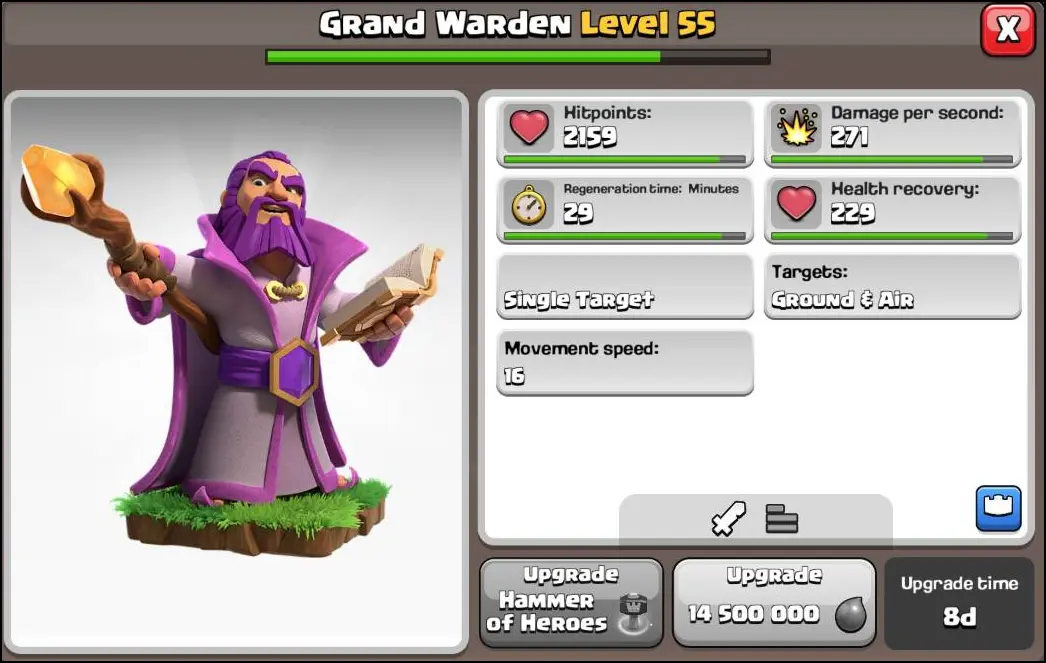
Unlocking Level Th11: The Max Grand Warden Strategy That Dominates Mobile Dominance